Category: 42 Word Retrospectives

Charlie and the Great Glass Elevator

Charlie and the Great Glass Elevator

by Roald Dahl (Alfred A. Knopf, 1972); audiobook read by Douglas Hodge (Random House Audio, 2013)
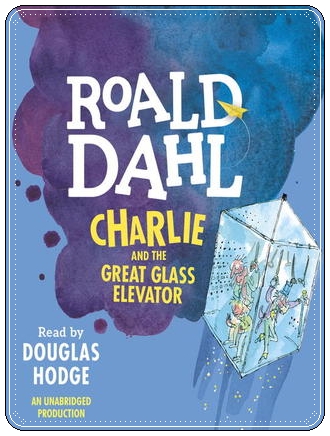
Book cover: “Charlie and the Great Glass Elevator” by Roald Dahl (Alfred A. Knopf, 1972); audiobook read by Douglas Hodge (Random House Audio, 2013)

A protracted example of Dahl’s rollicking lunacy, though in this instance lacking a greater storyline to lend substance beyond the jovial alien invasion, American caricaturing, silly rhymes, and terrible comeuppances visited upon cantankerous adults. Douglas Hodge narrates a suitably mercurial Willy Wonker.
The Cinema Swindle

The Cinema Swindle

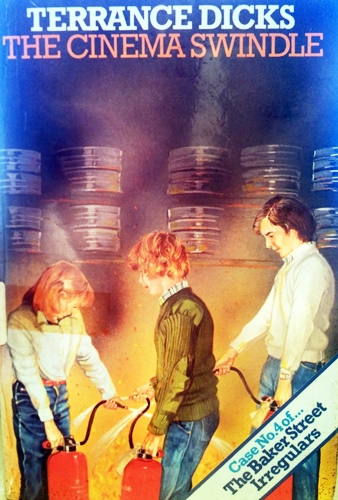
by Terrance Dicks (Blackie, 1980)

Book cover: “The Cinema Swindle” by Terrance Dicks (Blackie, 1980)

Again, a somewhat underwhelming mystery. Mickey, the most rambunctious but least interesting of the Irregulars, sees some action, but the others do very little. The book is most noteworthy for its frank, even nostalgic depiction of the seedier side of 1970s London.

The Haunting

The Haunting

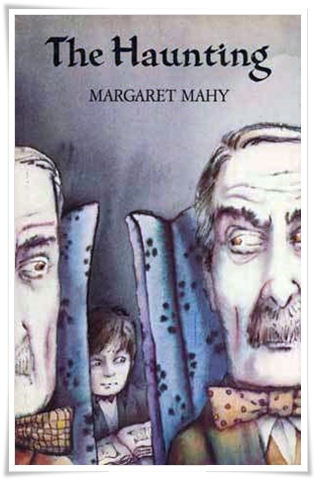
by Margaret Mahy (Atheneum, 1982); audiobook read by Richard Mitchley (Bolinda, 2015)

Book cover: “The Haunting” by Margaret Mahy (Atheneum, 1982); audiobook read by Richard Mitchley (Bolinda, 2015)

A surprising, decidedly non-formulaic play on genre expectations. The speculative element remains secondary to what Mahy does best—which is to depict relatable child characters (usually of the unheralded variety) surviving and even flourishing in unromanticised, often broken or ‘found’ family settings.

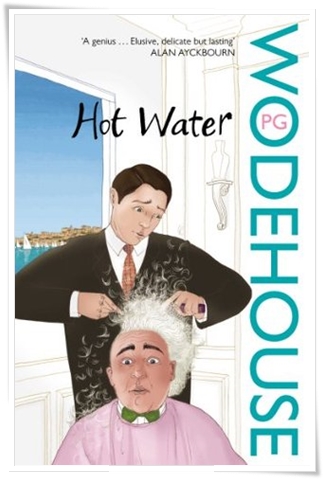
Hot Water

Hot Water

by P G Wodehouse (Herbert Jenkins, 1932); audiobook read by Jonathan Cecil (Blackstone, 2012)

Book cover: “Hot Water” by P G Wodehouse (Herbert Jenkins, 1932); audiobook read by Jonathan Cecil (Blackstone, 2012)

Not from one of Wodehouse’s famous series, but ably representative of his work. There are facetious conversations and flippant undertakings aplenty—ill-fated engagements; romantic entanglements and misunderstandings; comedowns and comeuppances—all steaming towards each other like ocean liners converging on an iceberg.

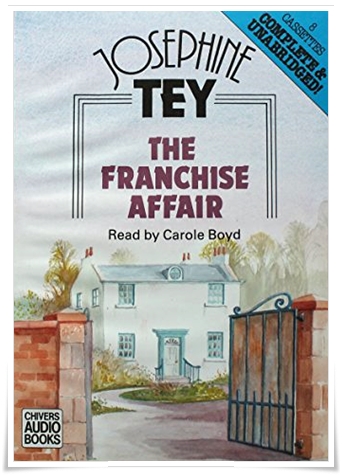
The Franchise Affair

The Franchise Affair

by Josephine Tey (Peter Davies, 1948); audiobook read by Carole Boyd (Audible Studios, 2011)

Book cover: “The Franchise Affair” by Josephine Tey (Peter Davies, 1948); audiobook read by Carole Boyd (Audible Studios, 2011)

An Inspector Alan Grant mystery where Grant is, at best, a subsidiary character. There is also very little mystery or investigation! The novel is more a character study and a depiction of (and social commentary on) village life post- Second World War.

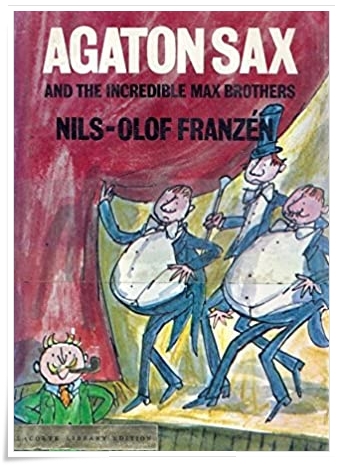
Agaton Sax and the Max Brothers

Agaton Sax and the Max Brothers

by Nils-Olof Franzén; ill. Quentin Blake (Andre Deutsch, 1970) [also published as “Agaton Sax and the Bank Robbers”]

Book cover: “Agaton Sax and the Max Brothers” by Nils-Olof Franzén; ill. Quentin Blake (Andre Deutsch, 1970) [also published as “Agaton Sax and the Bank Robbers”]

Assured and often droll (especially the conversations) but lacking the madcap joie de vivre of other Agaton Sax capers. The great detective’s secretive master-plan lacks the usual proactiveness—he and Lispington mostly trail after the crooks, indulging them until an unlikely denouement.

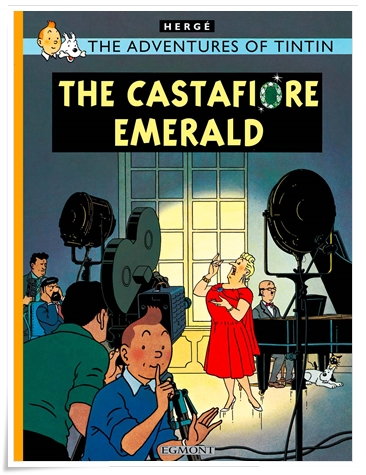
Tintin: The Castafiore Emerald

Tintin: The Castafiore Emerald

by Hergé, trans. Leslie Lonsdale-Cooper & Michael Turner (Methuen, 1963)

Book cover: “Tintin: The Castafiore Emerald” by Hergé, trans. Leslie Lonsdale-Cooper & Michael Turner (Methuen, 1963)

A truly delightful instalment. Hergé casts aside Tintin’s usual action-adventuring in favour of a manor house mystery full of playful misdirection. Even while humour and slapstick abound, he gives his fans a knowing wink (note the front cover) and subverts their expectations.

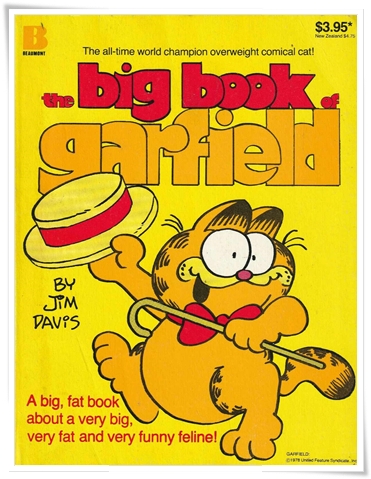
The Big Book of Garfield

The Big Book of Garfield

by Jim Davis (Beaumont, 1984)

Book cover: “The Big Book of Garfield” by Jim Davis (Beaumont, 1984)

One large-panelled Sunday strip per page, but printed on cheap paper and all in black-and-white. Davis occasionally captures something quirky or endearing in the human/cat dynamic, but for the most part the humour (and indeed the illustration) is uninspired, unnuanced and unfunny.

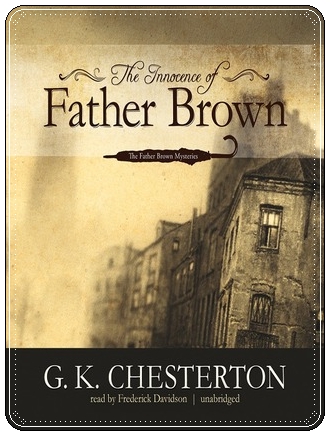
The Innocence of Father Brown

The Innocence of Father Brown

by G. K. Chesterton (Cassell, 1911); audiobook read by Frederick Davidson (Blackstone, 2012)

Book cover: “The Innocence of Father Brown” by G. K. Chesterton

Engaging short stories, particularly as read by Frederick Davidson. Father Brown’s deductions are more believable (and in their way no less impressive or trenchant) than those of, for example, Sherlock Holmes. The scenarios themselves, however, are often rather improbable in their construction.

Derelict Space Sheep