Category: 42 Word Retrospectives

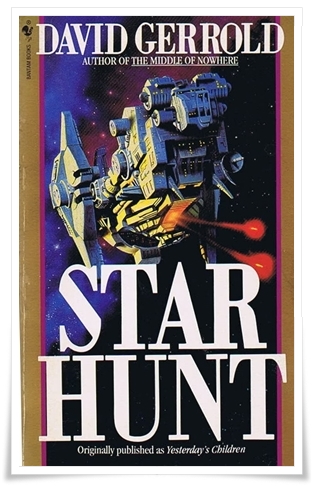
Starhunt

Starhunt

by David Gerrold (Hamlyn, 1985)

Gerrold_Starhunt

Not merely a reprint. Starhunt does encompass Yesterday’s Children but reboots at that story’s conclusion and ups the word count by a third, rewriting Korie from deranged and overambitious fool to master strategist and king of mind games. The psychobabble is unconvincing.


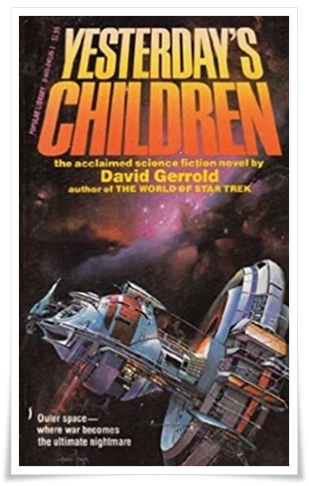
Yesterday’s Children

Yesterday’s Children

by David Gerrold (Faber & Faber, 1972)

Gerrold_Yesterday's Children

A grim search for realism in depicting space warfare. Having established his antihero protagonist aboard a tumbledown ship rife with interpersonal tensions—Star Trek in other words but stripped of hope and idealism—Gerrold pins his denouement on mental breakdown and gimmickry.


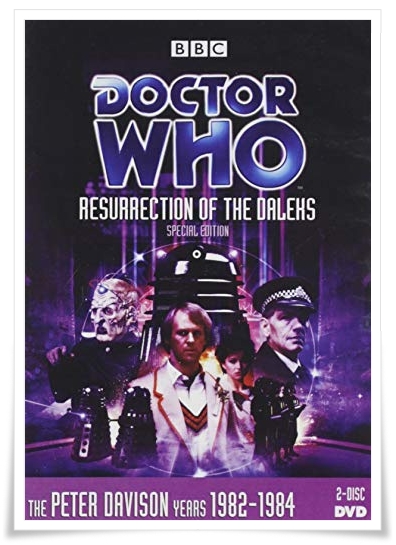
Doctor Who: Resurrection of the Daleks

Doctor Who: Resurrection of the Daleks

by Eric Saward; dir. Matthew Robinson (BBC, 1984)

Doctor Who_Resurrection Daleks

This serial begins with eerie promise and impressive acting/characterisation but degenerates into a confused mess, redeemed only by the pathos of Tegan’s departure. The Daleks (as so often in Doctor Who) have the intellectual sophistication of tantrum-prone toddlers with no inner monologue.


Conspiracy

Conspiracy

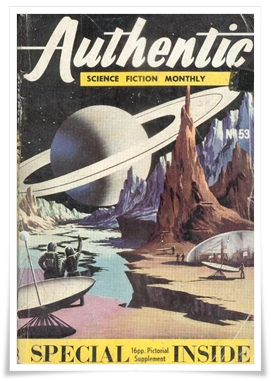
by John Christopher, Authentic Science Fiction Monthly 53 (Jan 1955) [Short Story]

Christopher_Conspiracy

When an eatery waitress picks one of her customers as a foreigner, he wants to know what gave him away. This short story appears at first a simple question of reality versus (SF invasion) paranoia, but Christopher adds his own little twist.


Deathwing Over Veynaa

Deathwing Over Veynaa

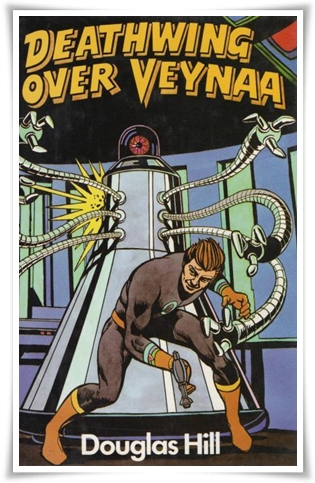
by Douglas Hill (Victor Gollancz, 1980)

Hill_Deathwing Over Veynaa

Middle-grade science fiction. Book two of Hill’s Last Legionary quartet/quintet succeeds admirably as both a standalone novel and a progression of the series. Hill’s characterisation may be unambiguous but he knows how to keep a story moving. An exciting single-sitting action adventure.


Johnny and the Dead

Johnny and the Dead

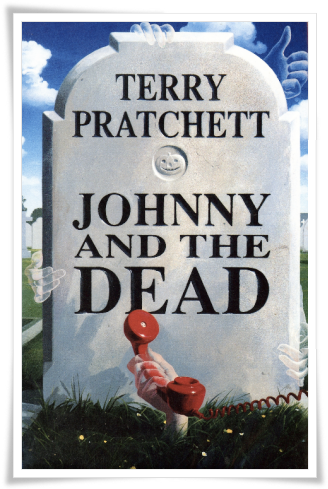
by Terry Pratchett (Doubleday, 1993); audiobook read by Richard Mitchley (Chivers, 2001)

Pratchett_Johnny Dead

Inspired by the real-life selling off of cemeteries in Westminister, Pratchett brings back middle-grade protagonist Johnny Maxwell (Only You Can Save Mankind) in this droll commentary on modern society (as it was in 1993) and earnest entreaty that history’s value be recognised.


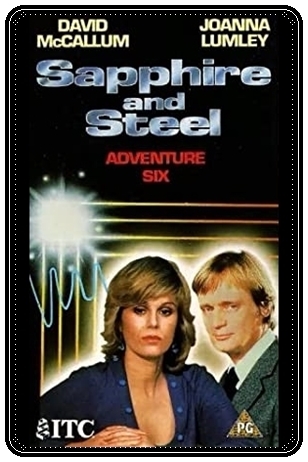
Sapphire & Steel, Assignment 6

Sapphire & Steel, Assignment 6

by P. J. Hammond (ITV, 1982)

Sapphire & Steel 6

The series’ much-vaunted 4-part conclusion. Hammond takes his characters out in style, concocting an eerie, unsettling scenario for Sapphire and Steel (and Silver) to unravel. Unfortunately, the trap’s convoluted outer layer proves unconnected to the springing of the more deadly trap within.


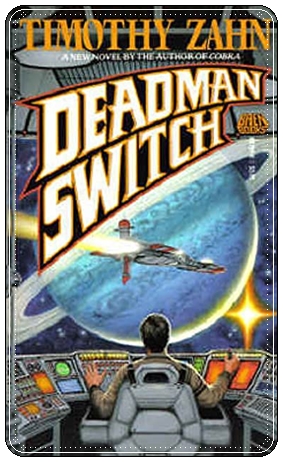
Deadman Switch

Deadman Switch

by Timothy Zahn (Baen, 1988)

Zahn_Deadman Switch

Zahn melds SF concept (navigation requires a recently deceased pilot; spaceships carry two death-row felons) to moral quandary (one ‘zombie’ pilot has been wrongly convicted). The novel goes through several phase shifts exploring the wider value of maintaining a small human focus.


Derelict Space Sheep