Category: 42 Word Retrospectives

Gently Through the Mill

Gently Through the Mill

by Alan Hunter (Cassell, 1958); audiobook read by Andrew Wincott (Bagna House, 2012)

Hunter_Gently Through the Mill

Gently is an intriguing detective — prone to brooding self-doubt — and Alan Hunter gives readers an unusual degree of access to his musings and methods. The mystery is much what viewers of the (subsequent) TV series might expect, solidly narrated by Andrew Wincott.


The Monster at the End of This Book

The Monster at the End of This Book

by Jon Stone; ill. Mike Smollin (Western Publishing Company, 1971)

Stone_Monster at the End of This Book

Little Golden Books are for the most part unreadable, yet here amongst them lies a classic. Grover, learning of the eponymous monster at the end of the book, attempts by persuasion and then fortifying illustrations to prevent the reader from turning pages.


The Bone is Pointed

The Bone is Pointed

by Arthur W. Upfield (Angus & Robertson, 1938); audiobook read by Peter Hosking (Bolinda, 2010)

Upfield_Bone is Pointed

This mystery doesn’t take much solving, but neither did many of Arthur Conan Doyle’s. As with Sherlock Holmes, it is the character of half-caste Aboriginal detective Napoleon Bonaparte that bewitches the reader, plus in this case Upfield’s vivid descriptions of outback Australia.


The Wind in the Willows

The Wind in the Willows

by Kenneth Grahame (Methuen, 1908); audiobook read by Michael Hordern (BBC, 2007)

Grahame_Wind Willows

This classic children’s book nowadays seems far-removed in both content and language, its wordy and bucolic idle verging at times on the truly soporific. Then the Toad of Toad Hall comes increasingly to the fore and one can appreciate all the fuss!


The Small Bachelor

The Small Bachelor

by P. G. Wodehouse (Methuen, 1927); audiobook read by Jonathan Cecil (Chivers, 2009)

Wodehouse_Small Bachelor

Immersed in New York culture yet without a character to provide an outsider’s perspective, Wodehouse’s usual wit and comedy of circumstance dips towards the more edgy, less comfortable humour of, say, Fawlty Towers, its intertwining of lives and problems more sequentially resolved.


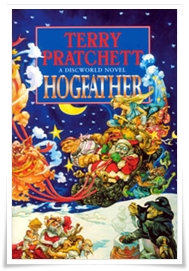
Hogfather

Hogfather

by Terry Pratchett (Gollancz, 1996); audiobook read by Nigel Planer (Isis, 1999)

Pratchett_Hogfather

Pratchett might belabour the point, yet his stark critique of Christmas is so lavishly adorned that the humour tends to dominate. Perhaps unsurprisingly for a black comedy, it is Death (no less) and his granddaughter who bring the magic back to Hogswatchnight.


Labyrinth

Labyrinth

by Bill Pronzini (St. Martin’s, 1980)

Pronzini_Labyrinth

In some ways it’s nice to return to the days when ‘Nameless’ was more a down-and-out private eye than the upstanding investigator of later books. Bill Pronzini showcases (as always) his gift for exploring the people and place that surround a mystery.


Matilda

Matilda

by Roald Dahl (Jonathan Cape, 1988); audiobook read by Kate Winslet (Puffin, 2013)

Dahl_Matilda

If Roald Dahl is one of the great middle grade writers, and Matilda one of his greatest books, then Kate Winslet takes us into the greatness stratosphere with her brilliant and definitive reading, making Matilda, Miss Honey and the Trunchbull truly unforgettable.


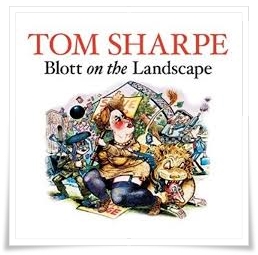
Blott on the Landscape

Blott on the Landscape

by Tom Sharpe (Secker & Warburg, 1975); audiobook read by David Suchet (AudioGO, 2011)

Sharpe_Blott on the Landscape

Sharpe weaves plot strands like Wodehouse and is similarly dexterous in his use of prose. He is coarse, though, and often vulgar, his characters toilet plungered en masse from the unseemly depths of human nature. Nonetheless, ‘Blott’ executes a dizzying comedic spiral.


Queen Lucia

Queen Lucia

by E F Benson (George H. Doran, 1920); full-cast reading (BBC, 2014)

Benson_Queen Lucia

Although the characters and conniving still come through with a certain distinct vigour, readers nowadays may find it hard to engage with the comedy of manners — the ceaseless shifting for social position — that plays out within Benson’s portrayal of 1920s upper-middle-class Brits.


Derelict Space Sheep