Category: 42 Word Retrospectives

Monkey: Journey to the West

Monkey: Journey to the West

by Wu Ch’êng-ên, trans. Arthur Waley (Allen & Unwin, 1942)

Wu Ch'eng-en_Monkey

For all its mischievousness and whimsy, this episodic sixteenth century Chinese fairy tale comes across as terribly belaboured in written form. When slogging through 350 pages it’s hard not to think that even Wu Ch’êng-ên would have preferred the cult television show.


The Gruffalo

The Gruffalo

by Julia Donaldson, ill. Axel Scheffler (Macmillan, 1999)

Donaldson_Scheffler_The Gruffalo

The rhyming couplets don’t always flow, but the word and plot repetitions are effective and Scheffler’s illustrations bring a bright, magical cheeriness to what otherwise might be an anxious tale of a mouse living off its wits in the deep, dark wood.


The City of Gold and Lead

The City of Gold and Lead

by John Christopher (Macmillan, 1967)

Christopher_City of Gold and Lead

The second instalment of John Christopher’s Tripods trilogy moves from quest narrative to absorbing, fully fledged science fiction as youngsters Will and Fritz infiltrate one of the aliens’ cities and learn the awful truth of the Masters whose tripods roam the Earth.


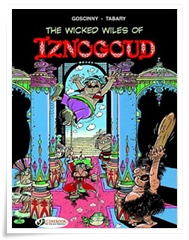
The Wicked Wiles of Iznogoud

The Wicked Wiles of Iznogoud

by Goscinny & Tabary (Cinebook, 2008)

[first published as “Les complots d’Iznogoud”, Dargaud Editeur Paris, 1967]

Goscinny_Tabary_Wicked Wiles of Iznogoud

Six pun-filled tales from ancient Baghdad as the wicked protagonist Iznogoud (think Dick Dastardly) is repeatedly thwarted in his nefarious plans to depose the caliph. Goscinny’s imagination is clearly in evidence but the stories lack the scope of his writing for Asterix.


Blind Fury

Blind Fury

dir. Phillip Noyce (1989)

Noyce_Blind Fury

A quintessentially 1980s Americanisation of the blind swordsman storyline oft-used and beloved of Japanese cinema. Rutger Hauer brings a certain quality to the lead role and — with precious little help! — just about carries the uneasy mix of action, drama and (occasional) humour.


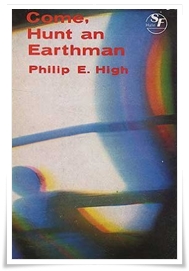
Come, Hunt an Earthman

Come, Hunt an Earthman

by Philip E. High (Hale, 1973)

High_Come Hunt an Earthman

Told in straightforward language, with pulp optimism and unambiguous views on right and wrong, High’s coming-of-age novel (humanity, that is, after first being preserved as game for alien hunters) has both reread value and more ideas crammed in than an Asimov trilogy.


The Gun Seller

The Gun Seller

by Hugh Laurie (Heinemann, 1996)

Laurie_The Gun Seller

Hugh Laurie is a funny man, and his only novel to date — a cynical, conversational, fourth-wall-breaking take on the conspiracy/thriller genre, submitted pseudonymously to the publisher — is very witty, very British, and a very accomplished romp, boldly self-deprecating where Bourne only bores.


Falling Down

Falling Down

dir. Joel Schumacher (1993)

Schumacher_Falling Down

Broken by the oppressive heat and intolerance of Los Angeles, William Foster embarks on an impromptu suburban odyssey, striking back ever more violently. Michael Douglas gives his best-ever performance in this surprisingly poignant black comedy about the way people treat each other.


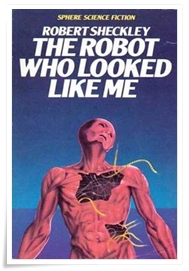
The Robot Who Looked Like Me

The Robot Who Looked Like Me

by Robert Sheckley (Sphere, 1978)

Sheckley_The Robot Who Looked Like Me

A short fiction collection in which the reader is promised (and given) satire, inventiveness and humour, but also off-the-cuff storytelling, an intrusive sexual focus, a name writer’s complacency and maddening, devil-may-care flights of fancy that lead nowhere under the guise of surrealism.


Jonathan Creek, Series 1

Jonathan Creek, Series 1

by David Renwick (BBC, 1997)

Renwick_Jonathan Creek 1

Jonathan Creek is a detective with Holmes-like deductive abilities, cajoled and manipulated into sleuthing by a self-serving journalist less sympathetic than any Watson figure. The protagonist is quietly compelling and the mysteries beguiling, albeit at times through an improbable marrying of circumstances.


Derelict Space Sheep