Tag: Herge

Tintin: The Calculus Affair

Tintin: The Calculus Affair

by Hergé (Methuen, 1960)
Herge_Calculus Affair

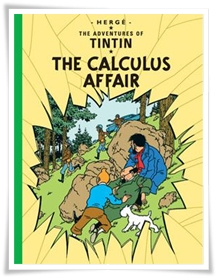
The first quarter is mystery but the remainder of The Calculus Affair sees a return to the improbable, death-defying adventuring of the earlier Tintin serials, thankfully with an intensity and mastery of physical humour sufficient to make this album an easy page-turner.


Tintin: Explorers on the Moon

Tintin: Explorers on the Moon

by Hergé (Methuen, 1959)

Herge_Explorers Moon

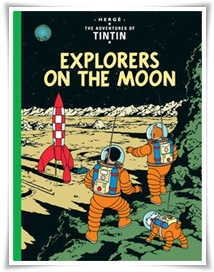
An extraordinary achievement, constituting both a prescient (ie. well-researched and well-reasoned) foretelling of a genuine moon landing, and a tour de force of Tintin staples: Boy’s Own action and comic misadventure. Unlike other volumes, this one is genuinely tense. Nail-biting yet funny!


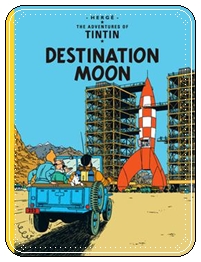
Tintin: Destination Moon

Tintin: Destination Moon

by Hergé (Casterman, 1959)

Herge_Destination Moon

Hergé’s phenomenal commitment to accuracy is nowhere greater attested than in ‘Destination Moon’ and its sequel. Thankfully, the laborious detail is offset by liberal doses of physical comedy courtesy of Captain Haddock, the Thom(p)sons, and—most gloriously—Professor Calculus acting the goat!


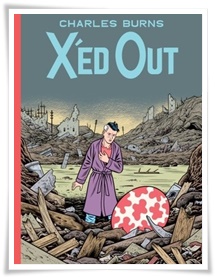
X’ed Out

X’ed Out

by Charles Burns (Pantheon, 2010)

Burns_X'ed Out

In this confronting homage, Burns shows us what Tintin’s adventures might be like if they took place in a grim alternative reality (think the Upside Down of ‘Stranger Things’). Burns lacks Hergé’s sense of movement and pacing but this remains darkly memorable.


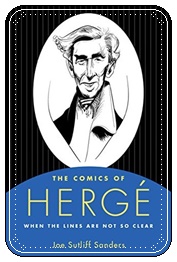
The Comics of Hergé

The Comics of Hergé: When the Lines Are Not So Clear

ed. Joe Sutliff Sanders (University Press of Mississippi, 2016)

Sanders_Comics of Herge

This collection of determinedly academic articles will be heavy-going even for scholars and Hergé fanatics, let alone the casual Tintin fan. Although some (obscurely) interesting points are raised, the book is severely diminished—as Sanders acknowledges—by a lack of supporting artwork.


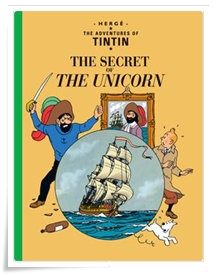
Tintin: The Secret of the Unicorn

Tintin: The Secret of the Unicorn

by Hergé (Methuen, 1959)

Herge_Secret Unicorn

Written during the German occupation of Belgium in World War II, The Secret of the Unicorn sees Hergé eschew political satire in favour of a well-constructed and comically sublime mystery/adventure. From nuances of expression to outrageous slapstick, Hergé here reaches new heights.


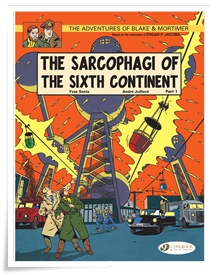
The Sarcophagi of the Sixth Continent, Part 1

The Sarcophagi of the Sixth Continent, Part 1

by Yves Sente; ill. André Juillard; trans. Jerome Saincantin (Cinebook, 2010)

Sente_Juillard_Sarcophagi Sixth Continent

An adventure of Blake & Mortimer, characters created by the late Edgar P. Jacobs (a collaborator of Hergé’s). Stylistically this is reminiscent of a Tintin story. The action, however, is unsoftened by humour and the dialogue comes unrefined from the information dump.


Tintin: The Broken Ear

Tintin: The Broken Ear

by Hergé (Casterman, 1943)

Herge_The Broken Ear

Tintin in this sixth book remains very much in his lucky reporter phase, barrelling with many an improbable escape through a convoluted, rather contrived mystery. That said, Hergé clearly delights in the action scenes and shows also his growing appreciation of satire.


Tintin and Alph-Art

Tintin and Alph-Art

by Hergé; trans. Leslie Lonsdale-Cooper & Michael Turner (Egmont, 1990) [original published by Casterman, 1986]

Herge_Tintin Alph-Art

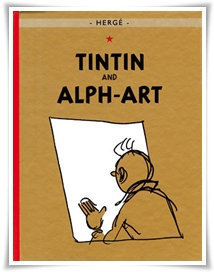
Hergé’s final Tintin adventure exists only as a collection of unfinished black-and-white sketches. Published alongside transcripts of the text (in progress), Alph-Art serves as much to sadden as to tantalise. Energetic; nostalgic (nay, playfully self-referential): there could have been one last hurrah!


Tintin: Flight 714

Tintin: Flight 714

by Hergé (Methuen, 1968) [first published in Tintin Magazine, 1966-1967]

Herge_Flight 714

More so than any of the twenty-one Tintin stories that preceded it, Flight 714 is divorced from a contemporary historical setting. Though seeking (supernatural) isolation, it retains Hergé’s boundless sense of adventure, his exquisite characterisation and his incomparable, most vividly depicted humour.


Derelict Space Sheep