Category: 42 Word Retrospectives

Heavy Weather

Heavy Weather

by P. G. Wodehouse (Little, Brown and Company, 1933); audiobook read by Martin Jarvis (Canongate, 2008)

Wodehouse_Heavy Weather

Less a sequel, more a direct continuation of ‘Summer Lightning’. Wodehouse takes up the strands again and concocts a book-length encore of comedic misfortunes, double-crossings and plans hatched at cross purposes. Martin Jarvis narrates with dignity but over-eggs some of the voices.


Guns, Germs, and Steel

Guns, Germs, and Steel: The Fates of Human Societies

by Jared Diamond (W. W. Norton, 1997); audiobook read by Doug Ordunio (Random House, 2011)

Diamond_Guns Germs Steel

A scientific work without literary pretentions (the audiobook plods along to an almost soporific extent), but the flow of the argument and the weight of evidence are hard to dispute. Title notwithstanding, Diamond convincingly reduces human history down to accidents of geography.


The Professionals #7: Hiding to Nothing

The Professionals #7: Hiding to Nothing

by Kenneth Bulmer [as Ken Blake] (Sphere, 1980)

Blake_Professionals 7

This tie-in novel features three of the better Professionals episodes but becomes increasingly confused in the telling. In the second story, Bulmer makes no effort to distinguish between a plethora of non-regular characters. In the third, he muddles up Bodie and Doyle!


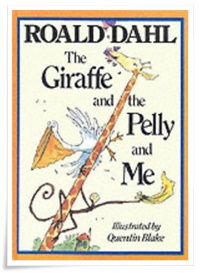
The Giraffe and the Pelly and Me

The Giraffe and the Pelly and Me

by Roald Dahl; ill. Quentin Blake (Jonathan Cape, 1985)

Dahl_Giraffe Pelly Me

Roald Dahl is always imaginative but this must be his most delightful story, free from the dark themes so characteristic elsewhere. There is nothing here but crazy, cute, happy fun… and as ever the writing is perfectly paired with Quentin Blake’s illustrations.


The Complete Peanuts: 1991 to 1992

The Complete Peanuts: 1991 to 1992

by Charles M. Schulz (Fantagraphics Books, 2014)

Schulz_Complete Peanuts 1991-1992

Despite Schulz’s at times self-indulgent format experimentations, Peanuts in the 90s starts to feel a little tired. (Snoopy’s cookie fixation, for instance, disappoints as a recurring punchline.) Nevertheless, there is much here to like. Only by his own benchmark is Schulz diminished.


Final Curtain

Final Curtain

by Ngaio Marsh (Collins, 1947); audiobook read by James Saxon (BBC, 1995)

Marsh_Final Curtain

Setting the scene is one thing, but Marsh goes so far as to leave Inspector Alleyn entirely absent for almost half the book. This, combined with a ho-hum denouement and repellent characters (laboriously portrayed), renders Final Curtain something of a damp squib.


At the Mountains of Madness

At the Mountains of Madness

by H. P. Lovecraft (Arkham House, 1936); audiobook read by Edward Hermann (Blackstone, 2013)

Lovecraft_Mountains of Madness

Sometimes the best horror stems from meticulous attention to detail in a real-world setting. Other times not. Lovecraft’s first-person narrator bemires himself in minutiae and in talking up the unspeakableness of what he is perennially about to relate. More soporific than horrific.


Five Children and It

Five Children and It

by E. Nesbit (T. Fisher Unwin, 1902); audiobook read by Johanna Ward (Blackstone, 1994)

Nesbit_Five Children and It

An endearing piece of children’s fiction from the turn of the 20th century, elegantly written yet still accessible (although society, of course, has changed considerably and the children’s monumental sense of entitlement is hard to stomach). Be careful what you wish for…


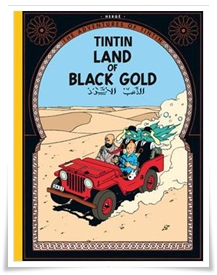
Tintin: Land of Black Gold

Tintin: Land of Black Gold

by Hergé (Methuen, 1972)

Herge_Land Black Gold

Land of Black Gold had a troubled creation (which ultimately shows), interrupted by the German invasion of Belgium in 1940, completed six years later and then revised twice more, ultimately being shoehorned—without a commensurate joie de vivre—into the Calculus years.


Around the World in Eighty Days

Around the World in Eighty Days

by Jules Verne (Pierre-Jules Hetzel, 1873); audiobook read by David Colacci (Brilliance, 1994)

Verne_Around the World in 80 Days

The narrative is patchy—some sections are filler, more stultifying travelogue than adventure—yet overall there emerges a genuine build-up of tension, culminating in a splendid denouement (albeit that Verne takes up Phileas Fogg’s woodenness and has a cringeworthy stab at romance).


Derelict Space Sheep